Mosques, Markets, and City Life Across Western Saudi Arabia
This is a contributed article.
Western Saudi Arabia does not feel organised around statements or contrasts. It unfolds through repetition — the same streets walked daily, the same pauses returning at familiar hours, the same routes bending slightly without ever fully changing. City life here moves with a practiced steadiness, shaped by habit more than by design.
Mosques, markets, and residential streets exist close together, not as separate zones but as overlapping layers. You pass from conversation into quiet and back again without marking the change. What matters is not where one thing ends and another begins, but how easily movement continues between them.
Movement That Carries the Same Tone
Travel between cities extends the experience rather than breaking it. Riding the Haramain Train feels calm, contained, and inward-facing despite the speed.
Inside, conversation stays low. Some people rest. Others sit without doing much at all. The journey does not insist on being noticed.
Arrival happens without emphasis.
Sacred Buildings as Part of Daily Circulation
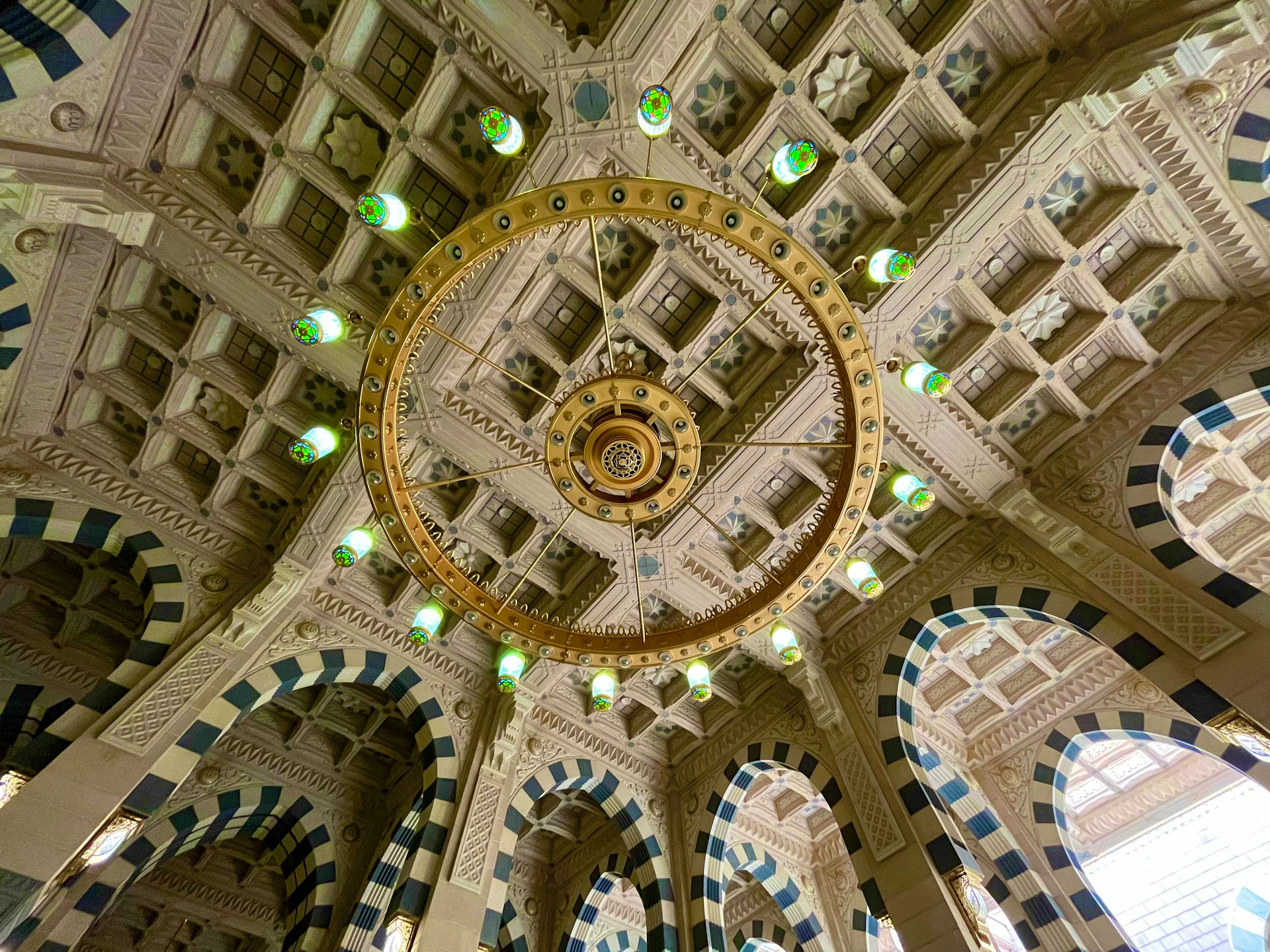
Mosques in western Saudi cities are rarely approached as destinations. They are encountered along the way. Streets widen almost imperceptibly near them. Sound thins slightly. Pace adjusts without instruction.
In Medina, this familiarity is especially noticeable. People pass in and out briefly, sometimes entering, sometimes continuing on. Life gathers around these spaces without centring on them.
The sacred remains present without withdrawing from routine.
Markets That Feel Remembered
Markets operate through memory rather than novelty. Vendors return to the same places. Routes through the stalls feel learned, even on a first visit. Voices overlap quietly. Movement stays close.
Commerce unfolds without performance. Transactions are brief. Recognition matters more than urgency. The market does not slow for observation, nor does it rush to impress.
It feels settled, as though it has been running this way for a long time.
Time Rounded Rather Than Divided
Prayer does not interrupt the day so much as soften its edges. Shops close briefly, then reopen. Streets thin, then refill. The transition feels expected rather than announced.
What’s striking is how little explanation this requires. The city adjusts collectively, then resumes without resetting itself. Time bends slightly, then returns to shape.
The rhythm holds.
Distance That Opens Gradually
The train from Medina to Jeddah loosens the atmosphere without fully releasing it. Density eases. Space opens. Air feels lighter before you consciously register why.
The shift does not feel like leaving something behind. It feels like the same line, now turned outward.
Movement remains continuous.
Coastal City Life Without Pause
In Jeddah, streets spread wider and movement disperses. Markets stretch outward rather than clustering inward. The presence of the sea is felt even when it isn’t visible.
Older neighbourhoods retain narrow passages and shade, while newer areas extend without clear boundaries. The city absorbs change instead of organising it neatly.
Life here feels open, but still familiar.

Streets Meant to Be Used
Across western Saudi Arabia, space rarely feels reserved. Streets are walked repeatedly. Markets are worked. Mosques are entered and exited without ceremony.
Nothing feels sealed off. History remains close because it continues to function. Buildings age without retreating from daily use.
The city teaches through repetition, not display.
Small Adjustments, Repeated Often
Over time, attention shifts to small changes. Voices lower near prayer. Pace slows near markets. Movement redirects slightly without comment.
These adjustments happen so often they stop feeling noticeable. You follow them without thinking.
They become part of how the city moves.
Sound Moving Through Space
Sound carries differently here. It expands, softens, returns. A call drifts across a market. For a moment, the street listens. Then voices rise again.
Neither moment dominates. Both pass through.
The city accommodates this without pause.
What Persists Without Explanation
Later, what stays with you is not a specific place. It’s the sense of continuity — the way movement rarely felt rushed, the way space adjusted without resistance.
These impressions do not resolve into conclusions. They remain loose, shaped by rhythm rather than landmark.
Western Saudi Arabia lingers in memory as a pattern of use and pause, steady and unforced, continuing quietly whether or not you are there to notice it.
When Movement No Longer Feels Directed
There comes a point where movement stops feeling purposeful and starts feeling habitual. You’re still walking, still adjusting, still aware of others passing through the same space, but the sense of heading somewhere specific fades. Routes repeat themselves gently. Turns are made without decision. The city seems comfortable with this looseness, as though it expects people to move without needing to account for every step.
Familiar Sounds, Slightly Repeated
Sound returns in fragments rather than patterns. Footsteps pass, then fade. Voices overlap briefly, then separate again. The same call, heard at different moments, feels altered without fully changing. These repetitions don’t accumulate into meaning. They remain suspended, marking time without measuring it.
What Stays Unfinished
Nothing here asks to be wrapped up neatly. Streets continue without finality. Routines loop without resolution. Even memory holds things loosely — not as images, but as impressions that resist being ordered. The experience remains open-ended, which feels appropriate. Some places are not meant to be completed, only moved through.
Like My Money Chronicles? Add us as a Preferred Source on Google to see more of our content in your search results.