Art and Architecture of Italy: From Milan’s Duomo to Florence’s Uffizi
This is a contributed article.
Italy is a place that refuses to stay on the pages of history books. It lives, breathes, and unfurls around you in stone and marble, in domes and frescoes, in the light that gilds every piazza. From Milan’s Gothic spires to Florence’s Renaissance treasures, from the shimmering canals of Venice to the eternal ruins of Rome, this is a land where art and architecture are not just admired but are an integral part of daily life.
Everywhere you go, beauty insists on being noticed. It’s in the shadow of a cathedral at sunset, in the cool hush of a gallery, in the scent of pizza wafting through cobbled streets. Traveling through Italy is about slowing down, letting yourself be caught by surprise, and realizing that here, art has always been another way of living. Before planning an international trip, it’s helpful to understand how to navigate a major hub like Atlanta’s airport.

Milan: A Cathedral in the Clouds
Milan is a city of style and energy, but its heart beats most powerfully in the Duomo. The first sight of it makes you pause, its white marble façade, bristling with spires, seems too delicate and too grand all at once. You crane your neck upwards, and still the cathedral soars higher, a lacework of stone against the blue.
Step inside, and the city’s noise fades away. The air is cool, scented faintly of incense, with the dim light catching on towering columns that seem to reach endlessly above. Sunlight spills through stained glass, scattering color across the marble floor like jewels dropped in silence. You can’t help but walk slowly, as though rushing would disrespect the space.
Climbing to the roof is another revelation. Suddenly, you are among the statues themselves, saints and angels carved in exquisite detail, standing guard against the wind. Beyond them, the Alps rise faintly in the distance, and Milan stretches out below, modern, busy, alive. The contrast reminds you that this cathedral, centuries in the making, belongs to the present as much as the past.
And Milan does not stop with the Duomo. In the Pinacoteca di Brera, Caravaggio’s dark intensity pulls you close, while Raphael’s serenity opens like a breath of calm. At Santa Maria delle Grazie, Leonardo da Vinci’s The Last Supper still dominates an unassuming wall, fragile but powerful enough to quiet an entire room.
Florence: The Renaissance Awakens
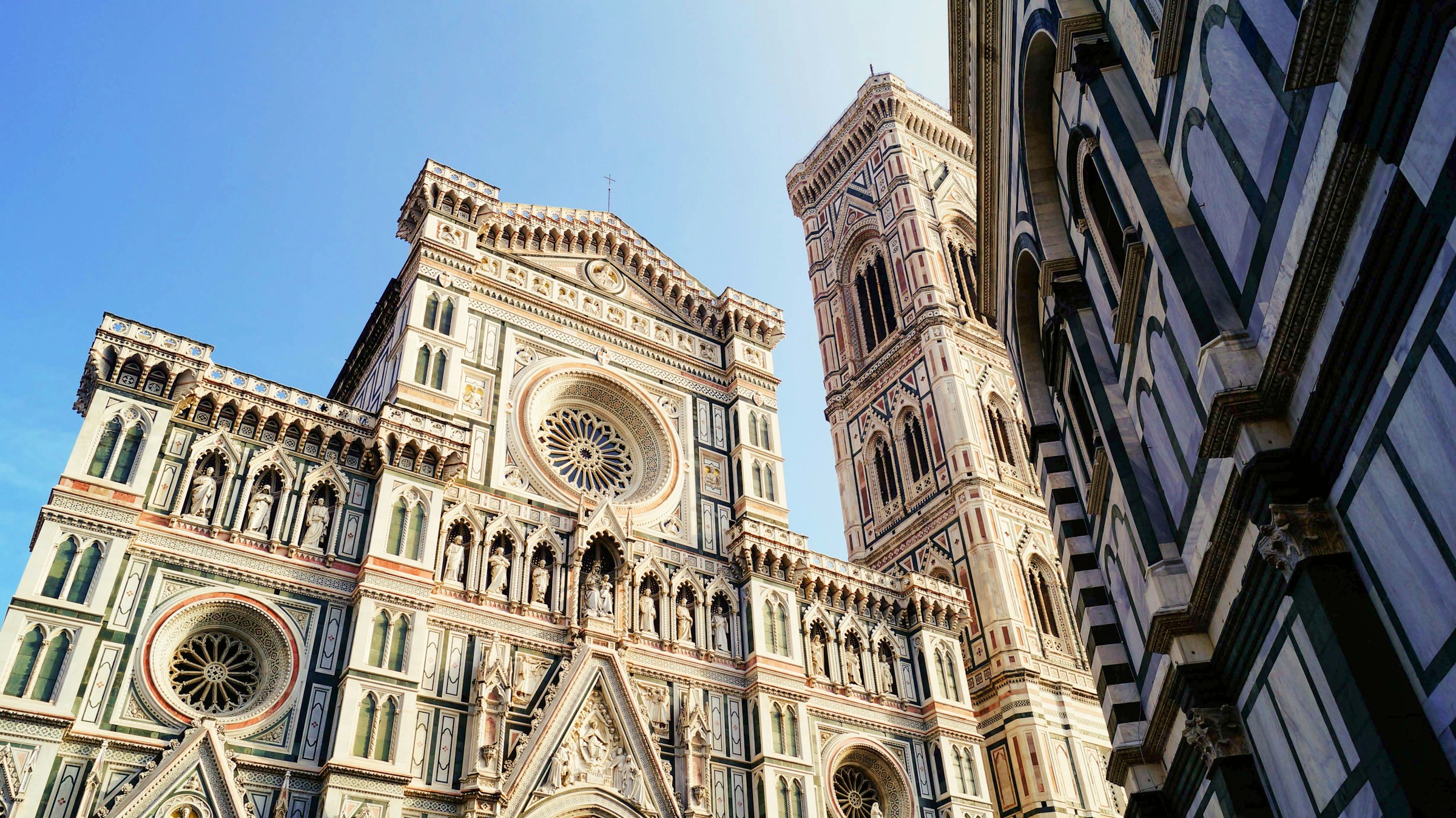
If Milan is ambition carved in marble, Florence is imagination painted into existence. Here, the Renaissance feels alive, not only in the museums, but in the very air you breathe. Narrow streets open suddenly into wide piazzas, where statues stand unguarded, their stone polished smooth by centuries of admiration.
The Uffizi Gallery is the heart of it all. Walk its corridors, and the past comes rushing in. Botticelli’s The Birth of Venusshimmers with ethereal beauty, while Michelangelo’s Holy Family radiates strength. You hear the soft echo of footsteps, the murmur of awe as visitors linger, reluctant to move on. The gallery itself is as much a masterpiece as the works it holds light filtering through arched windows, statues keeping watch along the hallways.
In the Galleria dell’Accademia, you come face to face with David. To see it in person is to understand why it became Florence’s symbol. The figure towers, every muscle alive with tension, yet his gaze is calm and defiant. The room falls quiet; even in a crowd, the statue demands reverence.
The journey between these artistic giants is part of the experience. The train from Milan to Florence doesn’t just carry you from one city to another; it weaves the story together. Outside the window, Tuscan hills roll in shades of gold and green, vineyards and olive groves catching the sun. Farmhouses perch on ridges, as though painted into the land. It feels like traveling through the very landscapes that once inspired the artists whose work you’ve just admired. Of course, finding affordable airfare is often the first step when planning a trip to Italy.
Venice: A Floating Masterpiece
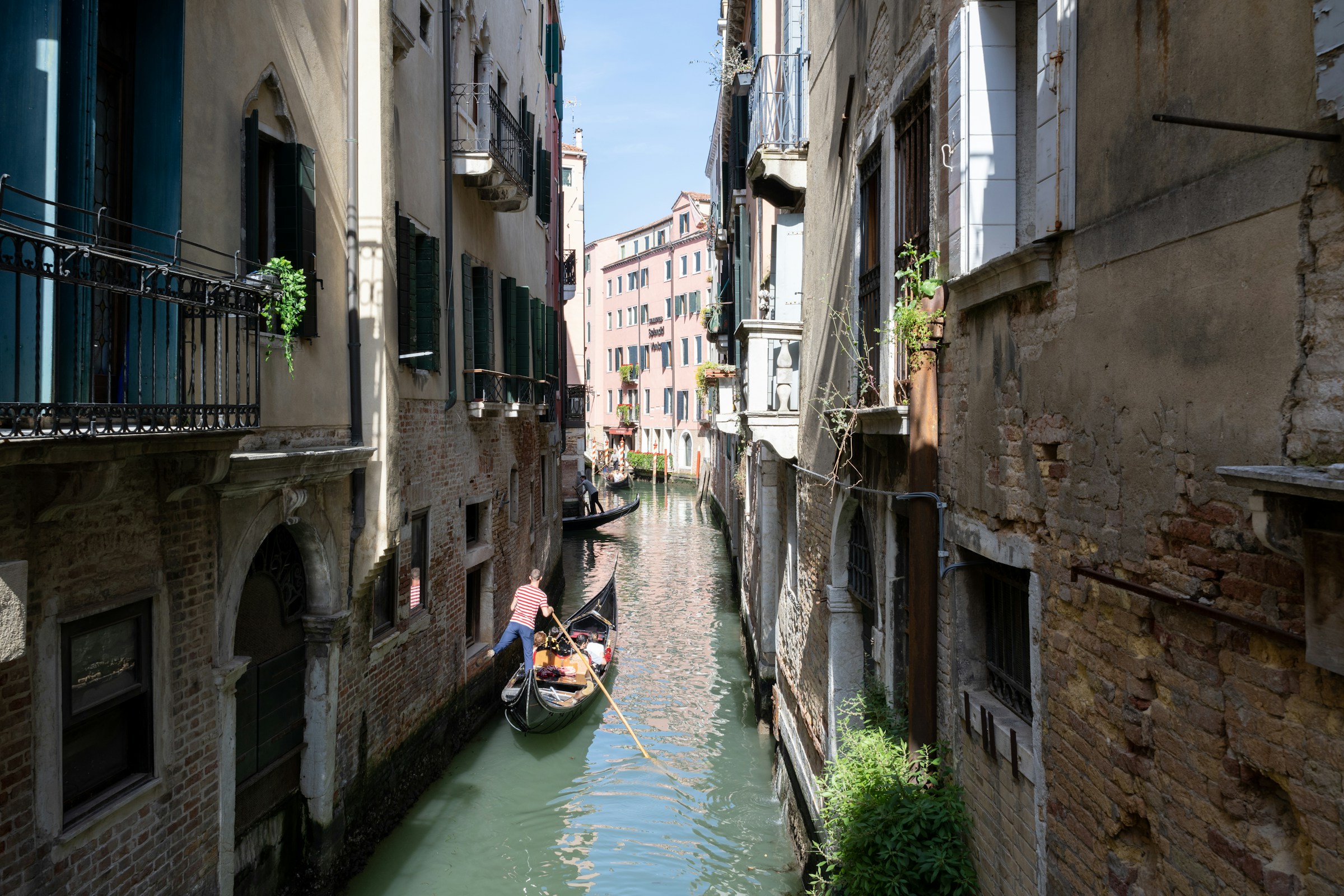
Venice feels like a miracle. The city floats, fragile and enduring, on its web of canals. In Piazza San Marco, St Mark’s Basilica glitters with mosaics that shimmer as the light shifts, while the Doge’s Palace looms with Gothic arches and halls filled with echoes of a once-mighty republic.
Yet Venice’s magic is in the small details. A gondola glides under a bridge, its oar cutting ripples into the water. Laundry flutters between pastel buildings, reflected in the green canals below. A hidden church reveals Tintoretto’s sweeping brushstrokes; a side street café hums with the sound of clinking glasses and laughter. The city feels alive yet timeless, as though you’ve stepped into a painting where the colors shift with every passing cloud.
The Gallerie dell’Accademia anchors Venice’s artistic soul, housing Bellini, Titian, and Carpaccio. A short walk away, the Peggy Guggenheim Collection offers a modern counterpoint, with Pollock, Picasso, and Dalí housed in a palazzo overlooking the Grand Canal. Past and present meet here, both celebrated equally in a city that has always thrived on exchange.
Leaving Venice is bittersweet, but the south beckons. On the train from Venice to Rome, the journey itself becomes part of the story. The land stretches wide, dotted with church towers and small towns where life seems to move at a slow pace. The rhythm of the rails carries you towards the Eternal City, and you feel anticipation build with every mile.
Rome: The Eternal City of Art
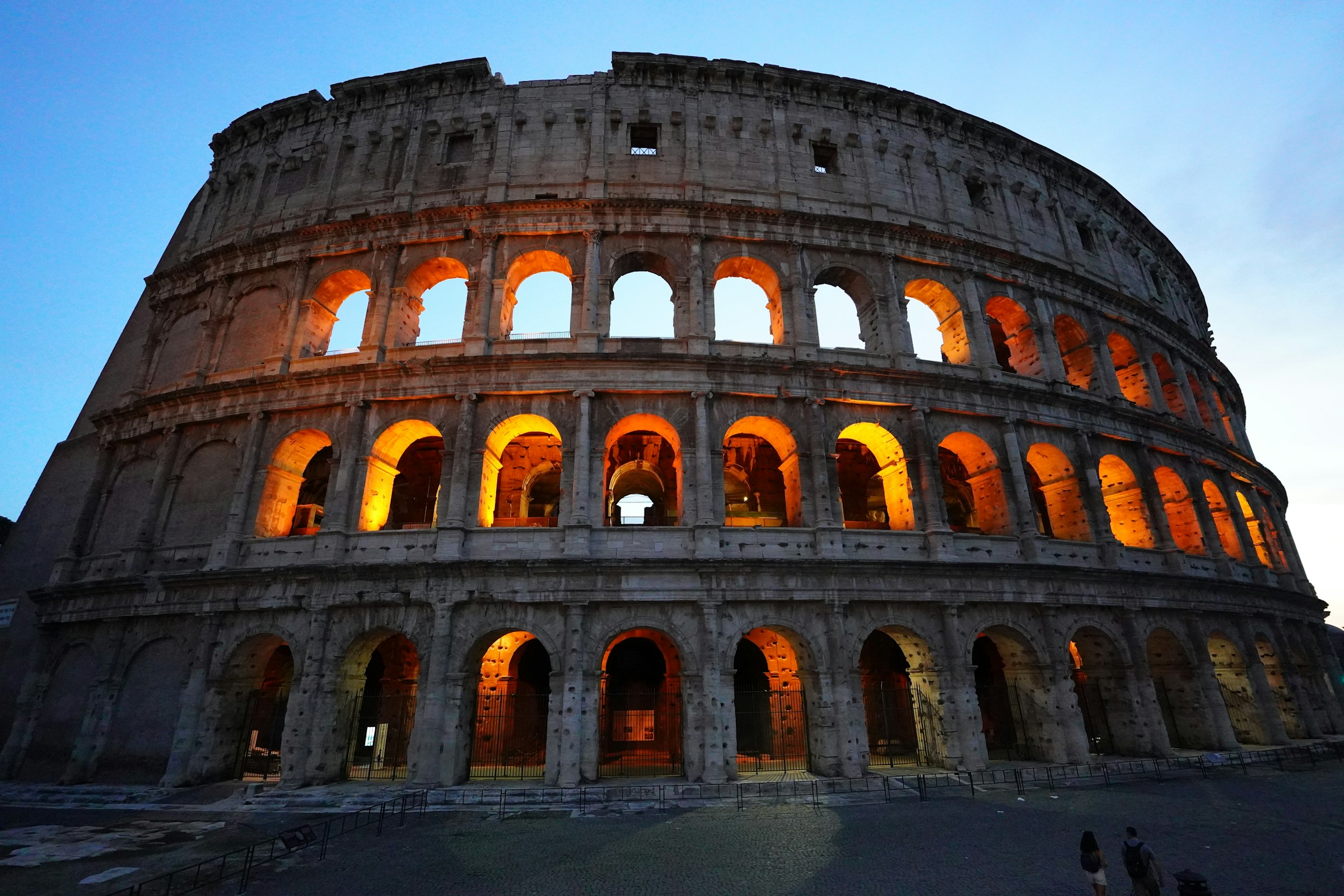
Rome is a city that overwhelms in the best way. One moment, you’re in the shadow of the Colosseum, hearing in your imagination the roar of crowds from centuries ago. Next, you’re standing in the Pantheon, sunlight streaming through its oculus, illuminating the marble floor like a stage.
The Vatican Museums stretch endlessly, room after room of treasures, ancient sculptures, maps drawn with exquisite care, Raphael’s frescoes. Finally, you step into the Sistine Chapel. Michelangelo’s ceiling unfolds above you, vast and alive, the figures twisting with energy. The Creation of Adam is more than paint on plaster; it’s a dialogue across centuries, a reminder of humanity’s capacity to create.
Rome’s beauty isn’t confined to museums. Fountains by Bernini bubble at intersections, their marble figures frozen in motion. Churches, from grand basilicas to small chapels, hold mosaics, frescoes, and sculptures that surprise at every turn. Even the air seems heavy with history, scented with espresso and stone warmed by the sun.
Naples and the South: Hidden Riches
Further south, Naples pulses with intensity. In the Archaeological Museum, mosaics from Pompeii sparkle with color, scenes of gods, lovers, and fruit captured forever. Walk the ruins themselves, and you feel the weight of silence. Streets worn by cart wheels, frescoes on villa walls, graffiti scratched into stone, daily life frozen in ash.
In Sicily, Palermo’s Norman Palace gleams with mosaics that shimmer in candlelight, while Monreale Cathedral dazzles with golden biblical stories stretching across every inch of its walls. These southern treasures remind you that Italy’s artistry isn’t confined to its north and centre — it is woven through the entire country.
The Italian Spirit: Art in Daily Life
What sets Italy apart is how art and architecture are not set aside as relics; they’re part of everyday life. In Florence, statues stand unguarded in piazzas, watched over by children playing football nearby. In Rome, fountains gurgle beside buzzing streets, their marble figures framed by traffic and chatter.
Even food becomes part of the artistry. In Bologna, a plate of tagliatelle al ragù arrives as carefully composed as a painting. In Naples, pizza ovens glow like kilns, turning dough and flame into edible masterpieces. Milan’s fashion houses treat fabric as sculpture, while Florence’s leather workshops echo the traditions of craftsmanship honed for centuries.
In Italy, beauty is not something separate from life. It is woven into the rhythm of the day, in food, fashion, stone, and sound.
Conclusion: A Journey Through Time and Beauty
Traveling across Italy is like stepping into a living gallery. What lingers long after the journey are not only the masterpieces, but the moments in between: the hush of a chapel at dusk, the echo of footsteps in a gallery, the taste of wine sipped slowly under a Tuscan sky. Italy insists that you pause, breathe, and let yourself be moved. Like any major travel experience, having a budget and game plan beforehand can make the trip even more enjoyable.
This is not a place where art and architecture sit apart from life. They are its very fabric, stitched into piazzas, churches, kitchens, and streets. And when you leave, you carry it with you, not as a memory to be boxed away, but as something alive, something that colors the way you see the world.
Like My Money Chronicles? Add us as a Preferred Source on Google to see more of our content in your search results.