
50 Blog Post Ideas for When You Don’t Know What to Write

Every blogger runs out of blog post ideas at some point. You sit down at your computer, open a blank document, and suddenly can’t think of anything worth writing about. I’ve been blogging for years, and I’ve definitely experienced that.
The good news is that you don’t have to come up with something completely original every time you publish. Sometimes, you just need a different angle on a topic your audience already enjoys. Whether you blog about money, travel, food, entertainment, or something else, there are plenty of directions you can take.
Here are 50 blog post ideas to help you plan your next few weeks or months of content.
50 Blog Post Ideas
1. How-To Posts
People search online every day because they want to learn how to do something. If you have experience with a particular subject, turn that knowledge into a helpful tutorial. I’ve written posts about getting started with affiliate marketing and saving for an emergency fund.
2. Interviews
Interview someone doing interesting things in your niche. I previously featured people with different side hustles, and those conversations helped keep me motivated. Interviews also introduce your audience to perspectives they might not hear elsewhere.
3. Current Events
There’s always something happening in the news. Choose a development that connects to your blog and explain why it matters to your readers. A finance blogger could discuss a major business announcement, while a sports blogger might cover a big trade.
4. Life Updates
Share what’s happening in your life or business. You don’t need a major announcement to write an update. Readers sometimes enjoy hearing about your progress, challenges, and lessons learned.
5. Mother’s Day Gift Ideas
Create a Mother’s Day gift guide featuring products for different budgets and interests. You could organize suggestions around hobbies, practical gifts, or experiences. Check out my Mother’s Day gift ideas for inspiration.
6. Host a Giveaway
A giveaway can encourage participation and introduce your content to new readers. Choose a prize that actually interests your audience instead of something random. Tools such as Gleam can help manage entries, but make sure you follow applicable promotion rules.
7. Father’s Day Gift Ideas
Father’s Day provides another opportunity for seasonal content. You could feature affordable gifts, personalized presents, or experiences dads might enjoy. My Father’s Day gift guide is an example.
8. Blog Post Roundup
Share several useful articles you’ve recently read. I used to publish monthly roundups featuring ten posts that caught my attention. Add a short explanation of why each article is worth reading rather than simply dropping links.
9. Product Reviews
Review products or services you actually understand. Explain what you like, what could be better, and who should consider buying them. Product reviews can also create affiliate income opportunities when you recommend relevant products and clearly disclose affiliate relationships.
10. Goals
Share your monthly, quarterly, or yearly goals. Tell readers what you’re working toward and how you plan to get there. I occasionally share goals on MMC because writing them down helps me stay focused.
Thinking About Starting Your Own Blog?
If you’ve been collecting blog ideas but haven’t launched a website yet, you’ll need hosting and a domain name.
I’ve used hosting recommendations in my blogging content for years. You can explore BigScoots for hosting or GoDaddy when shopping for a domain. Compare the current pricing, renewal rates, and features before choosing either service.

11. Debt Updates
If you’re paying off debt, document the journey. Share what you’re doing, what’s working, and where you’ve struggled. You don’t have to pretend every month is a success.
12. Spring Break Travel
Write about destinations people can visit during spring break. Include transportation options, estimated costs, and activities for different budgets. A practical guide can be more useful than a simple list of destinations.
13. Industry Statistics
Find interesting statistics related to your niche and explain what they mean. A sports blogger could analyze attendance numbers, while a business blogger might examine spending trends. Always use reliable sources and check the dates.
14. Favorite Side Hustles
Discuss side hustles you’ve tried or researched. Explain the startup costs, time commitment, and potential challenges. Readers want to know what an opportunity actually involves before jumping in.
15. Movie Reviews
If you cover entertainment, review a new movie or revisit an older favorite. Discuss the story, performances, and what made it memorable. Give readers a reason to watch it—or skip it.
16. New Year’s Resolutions
Share resolutions at the beginning of the year and revisit them later. Talk about which ones you accomplished and which ones fell apart. You can also offer practical New Year’s resolution ideas.
17. Credit Card Reviews
Compare credit cards based on rewards, fees, interest rates, and other features. Explain who might benefit from a particular card and who should avoid it. Make sure the details are current because offers change.
18. Different Ways to Travel
Compare flying, driving, buses, and trains for a particular trip. Include costs, convenience, travel time, and your personal experiences. Readers appreciate knowing the trade-offs before booking.
19. Mistakes You Made in College
I know I’m not the only person who made questionable decisions in college. Share a few mistakes and explain what you learned. Personal stories can be entertaining while still offering useful advice.
20. Meal Prep
Create a meal prep guide for busy people. You could focus on affordable lunches, beginner-friendly recipes, or meals that can be prepared ahead of time. Include a shopping list to make the article more useful.
21. Winter Destinations
Feature places worth visiting during winter. Some readers want snow and skiing, while others are looking for warmer weather. Include a mix of destinations and explain what makes each one appealing.
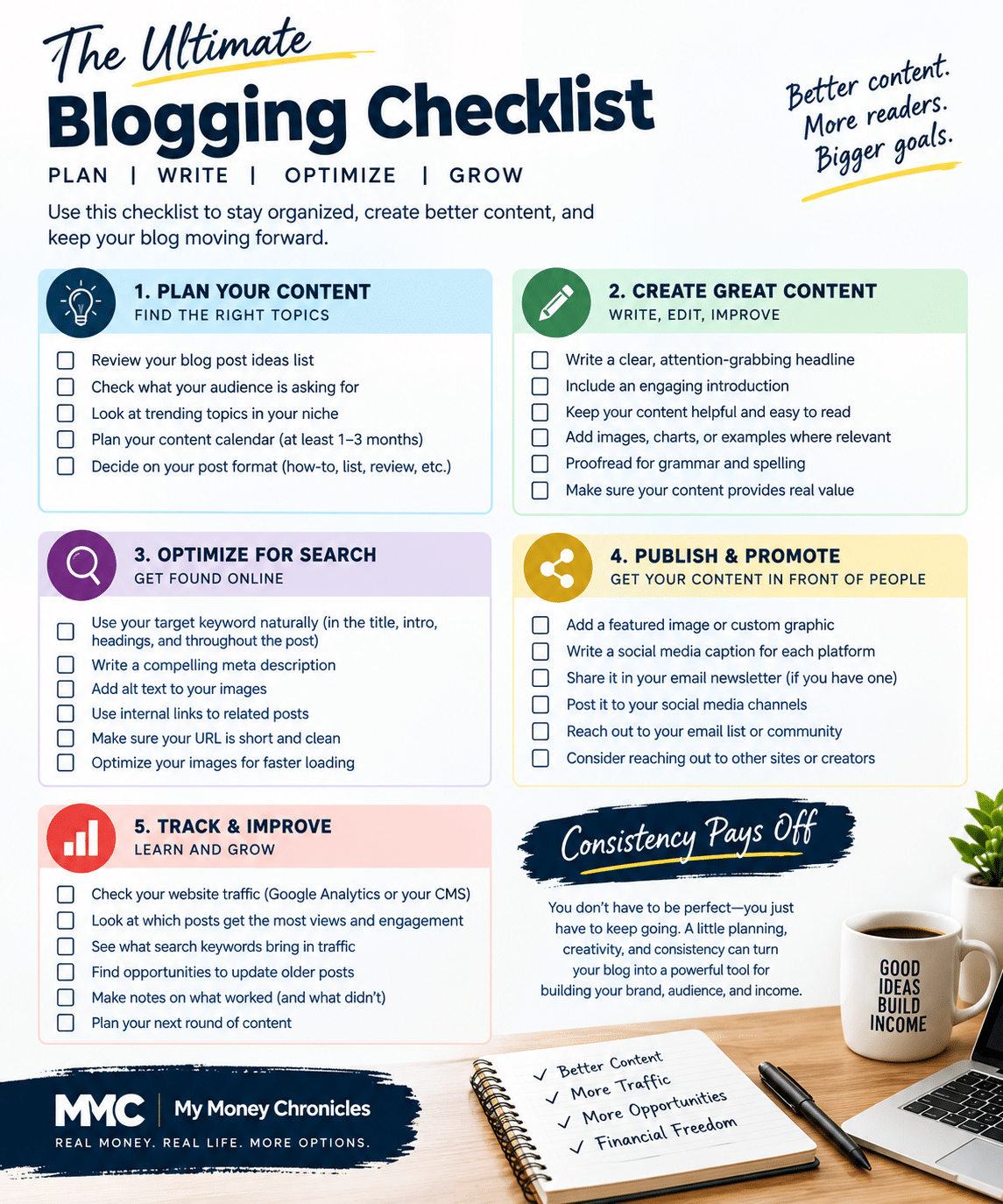
22. Checklists
Turn a complicated process into a checklist. Packing lists, moving checklists, and business launch checklists are all possibilities. Readers can save these posts and return whenever they need them.
23. Work-From-Home Jobs
Create a guide to legitimate remote jobs. Discuss responsibilities, required skills, and where readers can search for openings. Be careful not to confuse traditional employment with freelance opportunities.
24. Airbnb Stories
If you’ve stayed in or hosted an Airbnb, share your experiences. Discuss what went well, what surprised you, and what you’d do differently. Real experiences can help readers avoid expensive mistakes.
25. How to Save Money
Money-saving content can work throughout the year. Share practical ways to reduce expenses, shop smarter, or plan for major purchases. Focus on tips people can realistically use instead of telling everyone to stop buying coffee.
26. MLMs
Explain how multilevel marketing companies operate and what people should investigate before joining. Discuss startup costs, recruiting expectations, and income disclosures. Avoid assuming every company operates identically, but don’t ignore the risks.
27. Regrets
Write about something you wish you’d handled differently. It could involve money, relationships, business, or travel. Explain what the experience taught you and how your perspective has changed.
28. Reader Surveys
Ask your audience what they want to learn about next. I ran a reader survey years ago, and the responses gave me enough ideas for months of content. You might discover questions you never thought to answer.
29. Black Friday Deals
Create a Black Friday shopping guide for your niche. Compare deals, discuss shopping strategies, and update the article each year. My Black Friday shopping tips are an example of seasonal content.
30. Best Bank Accounts
Compare checking or savings accounts based on fees, minimum balances, interest rates, and features. Explain which accounts might work for different financial situations. Verify all rates and terms before publishing.
Another Option for New Bloggers
If you’re comparing hosting companies, Bluehost is another provider to research. Look beyond introductory offers and check what you’ll pay when your plan renews.
I’ve also written about starting a blog with Bluehost, which may help if you’re still figuring out the setup process.
31. Favorite Travel Websites
Review travel websites you use for flights, hotels, or activities. Explain which features you like and when you’d use one site over another. Screenshots and real booking examples can make the review stronger.
32. Relationship Mistakes
If personal relationships fit your blog, share lessons you’ve learned. You don’t need to reveal every private detail. Focus on experiences that could help someone else.
33. Compare and Contrast
Compare two products, services, destinations, or strategies. Explain the differences, advantages, and disadvantages. These posts are especially helpful when readers are deciding between options.
34. A Day in Your Life
Take readers through a typical day. Show how you manage work, family responsibilities, hobbies, or your business. Behind-the-scenes content helps people understand what your routine actually looks like.
35. Books You’ve Read
Share books you’ve recently finished or recommend to others. Include the author, main takeaway, and who would enjoy each title. You could also explore ways to get paid to read books.
36. Political Topics
If politics connects to your niche, cover policies and decisions that affect your audience. A money blogger might explain proposed tax changes or student loan policies. Use credible sources and separate facts from your opinions.
37. Tips for College Students
Share advice about managing money, choosing classes, finding internships, or preparing for graduation. You could also discuss mistakes students should avoid. Practical tips from someone with firsthand experience can be especially valuable.
38. TV Show Reviews
Review a show you’ve been watching. Discuss the characters, storylines, and whether it’s worth someone’s time. You can also compare different seasons or recommend similar programs.
39. Christmas Content
Christmas offers plenty of blogging opportunities. You could publish gift guides, budget-friendly holiday activities, decorating ideas, or ways to earn extra holiday money. Plan ahead so readers find the content before the holiday arrives.
40. Tutorials
Create a detailed tutorial that walks readers through a specific task. Include screenshots or examples when necessary. A tutorial should leave someone confident enough to complete the process themselves.
41. Favorite YouTube Channels
Recommend YouTube channels that teach, entertain, or inspire you. Explain what makes each channel useful and who should subscribe. You could organize the list by topic.
42. Income Reports
If you’re comfortable sharing your earnings, publish an income report. Break down revenue sources, expenses, and lessons learned. Be transparent about the work involved rather than making the results look effortless.
43. Case Studies
Explain how you achieved a particular result or tested a strategy. Include your starting point, what you tried, and what happened. Even an unsuccessful experiment can become an interesting case study.
44. About Me
Write a personal introduction for new readers. Discuss your background, why you started blogging, and what people can expect from your website. Update it as your interests and business evolve.
45. Budgeting Tips
Share ways readers can manage their income and expenses. You could discuss budgeting methods, common mistakes, or how to handle irregular income. My money tips cover related personal finance topics.
46. Food Recipes
If food fits your niche, share a recipe you’ve made. Include ingredients, preparation steps, cooking time, and photos. Personal notes about what worked or didn’t work can make the post more helpful.
47. Bucket Lists
Share experiences you hope to have someday. I’ve talked about some of my bucket list goals before, and they’re fun to revisit. You could create lists for travel, business, sports, or personal milestones.
48. Frequently Asked Questions
Collect questions readers regularly ask and answer them in one article. This can save time and make useful information easier to find. Update the post whenever new questions come up.
49. Rants and Opinion Pieces
Sometimes you have something to get off your chest. Write about an issue in your industry that frustrates you, and explain why. The strongest opinion pieces offer more than complaints—they give readers something to think about.
50. Favorite Podcasts
Recommend podcasts you enjoy listening to. Explain what each show covers and why it’s worth checking out. You can also share specific episodes that taught you something or changed your perspective.
How to Choose Your Next Blog Post Idea
You don’t need to use every idea on this list. Start with topics that fit your blog and answer questions your readers actually have. Think about conversations you’ve had, comments people leave, and problems you’ve personally solved.
Before writing, search for your topic to see what information is already available. Look for questions that existing articles haven’t answered well, and consider what personal experience you can add. A useful, specific post is better than publishing something just to meet a schedule.
You can also turn one broad idea into several related articles. For example, a post about side hustles could lead to separate guides about startup costs, common mistakes, and your own experiences.
Running out of blog post ideas doesn’t mean you have nothing valuable to share. Sometimes, you need to revisit an old experience, answer a reader’s question, or approach a familiar subject differently.
I’ve been blogging long enough to know that inspiration doesn’t always show up when you need it. Keep a running list of ideas so you’re not starting from scratch every time you sit down to write.
Pick a few topics from this list, put them on your content calendar, and start creating.
 ]
Like My Money Chronicles? Add us as a Preferred Source on Google to see more of our content in your search results.

Jason Butler is the founder of My Money Chronicles and an SEO consultant with over a decade of blogging experience. Since 2015, he has earned income through side hustles including blogging, eBay flipping, affiliate marketing, and freelance work while paying off over $64,000 in debt. His work has been featured in Forbes, Discover, Investopedia, and Yahoo Finance.


