
5 Best Freelance Writing Platforms to Find Paid Work

Freelance writing is one of those side hustles you can start without spending a ton of money. If you can write well, meet deadlines, and understand what clients need, you can make money writing blog posts, website content, newsletters, and more.
The challenge is finding clients who will actually pay you what your work is worth. Some freelance writing platforms have plenty of opportunities but lots of competition, while others focus on experienced writers with specialized skills. Before signing up for everything, it helps to understand how each platform works.
Here are five freelance writing platforms worth checking out, along with tips for finding work and avoiding low-paying assignments.
What to Look for in a Freelance Writing Platform
Before joining a freelance writing website, pay attention to its fees, payment policies, and available jobs. A platform might advertise hundreds of opportunities, but that doesn’t mean those projects are worth your time. You want clients with reasonable budgets, clear expectations, and a history of paying freelancers.
Also, check how the platform handles revisions and disputes. Some clients will ask for a few reasonable changes, while others may try to turn one assignment into three different projects. Understanding the rules before accepting work can save you a lot of frustration.
Finally, consider your experience level. Beginners may benefit from platforms with open marketplaces, while experienced writers might prefer networks that connect them with established businesses.
1. Upwork
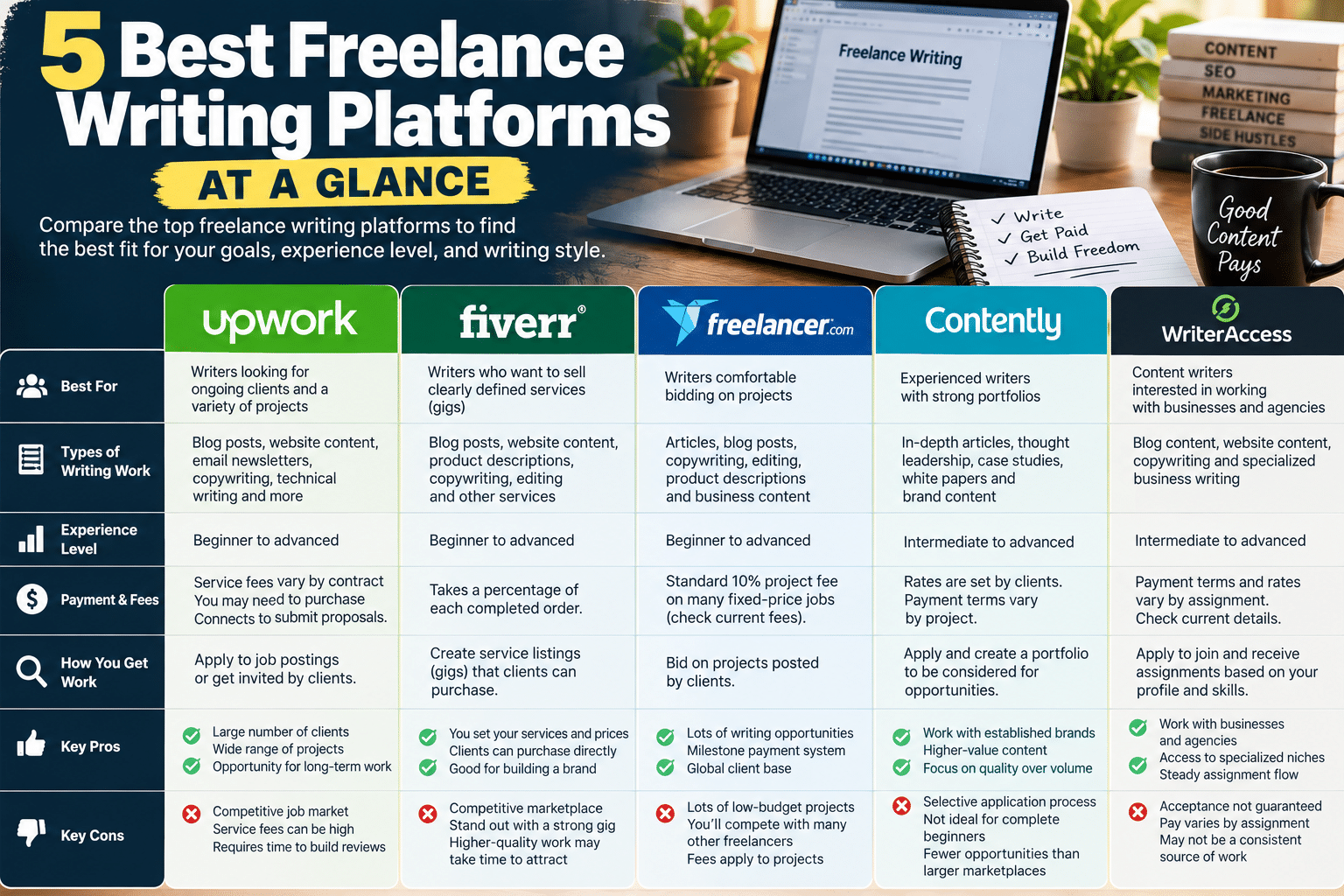
Best for: Writers looking for ongoing clients and different types of projects
Upwork is one of the better-known freelance marketplaces. Businesses use it to hire writers for blog posts, website copy, email newsletters, technical documentation, and other projects. You can find both one-time assignments and longer-term contracts.
Your profile matters because clients need to understand what you offer. Instead of using a generic title like “Freelance Writer,” try something more specific, such as “SEO Content Writer for Small Businesses.” Include relevant writing samples and explain the types of problems you help clients solve.
When applying for jobs, avoid sending the same proposal to everyone. Read the description, address the client’s needs, and explain how your experience fits the assignment. A few thoughtful proposals are usually a better use of your time than dozens of generic applications.
Upwork charges freelancer service fees that vary by contract, so account for those costs when setting your rates. You may also need to purchase Connects to submit proposals. Review Upwork’s current pricing before getting started.
2. Fiverr
Best for: Writers who want to sell clearly defined services
Fiverr works differently from traditional job boards. Instead of applying for every assignment, you create service listings called gigs that customers can purchase. Writers can offer blog posts, product descriptions, website content, editing, and other services.
One mistake beginners make is assuming they have to charge extremely low prices to attract customers. You don’t need to offer a 1,000-word article for $5. Instead, create packages based on the amount of work involved, your experience, and what customers receive.
For example, you could offer a basic package for a short blog post, a standard package that includes keyword research, and a premium package with additional content or editing. Clearly explain what’s included, how many revisions customers receive, and when you’ll deliver the finished work.
Fiverr deducts a portion of each completed order, so factor its current seller fees into your prices. The biggest advantage is having a service people can purchase without negotiating every detail from scratch.
3. Freelancer.com
Best for: Writers comfortable bidding on projects
Freelancer.com connects freelancers with businesses looking for help on different projects. Writing opportunities can include articles, copywriting, editing, product descriptions, and business content.
Like Upwork, you’ll compete with other freelancers for assignments. Some clients have reasonable budgets, while others expect a lot of work for very little money. Don’t feel pressured to accept a terrible rate just because you’re trying to get your first review.
Before bidding, review the client’s profile, project description, and payment history when available. Make sure you understand the deliverables and use the platform’s milestone payment system appropriately. That gives you a clearer agreement about when payments should be released.
Freelancer.com charges project fees, including a standard 10% fee or $5 minimum on many fixed-price projects. Check its fees page because certain projects have different terms.
4. Contently
Best for: Experienced writers with strong portfolios
Contently is worth considering if you already have published writing samples and experience creating professional content. Its talent network connects qualified writers and other creative professionals with brands that need specialized content.
This isn’t necessarily the best place to land your first freelance writing assignment. Companies using professional content networks may want writers who understand specific industries, conduct interviews, or produce detailed research-based articles.
You can create a free portfolio showcasing your work, but having a portfolio doesn’t guarantee assignments. Your experience and the needs of participating brands influence whether you’re matched with opportunities.
If you’ve written about finance, technology, healthcare, or another specialized subject, Contently could be worth exploring alongside other platforms. Just don’t depend on it as your only source of freelance income.

5. WriterAccess
Best for: Content writers interested in working with businesses and agencies
WriterAccess is a content-focused platform that connects businesses with freelance writers and other creative professionals. Its services include blog content, copywriting, and specialized business writing.
For writers, the main appeal is working on assignments that fit their experience and subject knowledge. Someone with a background in finance or technology may be better positioned for specialized projects than someone offering general articles about everything.
If you’re considering WriterAccess, review its current writer application process, assignment availability, and payment terms before investing time in a profile. Getting accepted to a writing platform doesn’t automatically mean you’ll receive steady work.
I’d treat WriterAccess as another potential source of clients rather than the foundation of your entire freelance business.
Bonus: Finding Freelance Writing Clients Outside Platforms
Freelance marketplaces can help you get started, but they aren’t the only way to find paying clients. You can also approach small businesses, marketing agencies, bloggers, and companies that regularly publish online content.
With my background in SEO and content strategy, I’ve seen how important useful website content is for businesses. Companies need writers who can understand their customers, organize information, and create content that serves a purpose. Knowing basic SEO can make your services more valuable.
Start by identifying businesses in an industry you understand. Look at their websites, see where their content could improve, and send a short, personalized pitch explaining how you could help.
You may hear no several times before getting a yes. That’s part of freelancing, but building direct client relationships can help you become less dependent on marketplaces.
How Much Can Freelance Writers Make?
Freelance writing income varies depending on experience, subject matter, client budgets, and the type of content you’re creating. A beginner writing short blog posts may earn considerably less than an experienced writer producing technical articles or business case studies.
Before accepting a project, estimate how long it will take. A $100 article sounds decent until you realize it requires six hours of research, writing, and revisions. That works out to less than $17 per hour before taxes and platform fees.
As you gain experience, focus on improving your portfolio and finding clients who value your skills. Learning high-income skills such as SEO, research, and content strategy can also help you offer more than basic writing services.
Which Freelance Writing Platform Should You Choose?
If you’re just getting started, I’d look at Upwork and Fiverr first. Upwork lets you apply for projects, while Fiverr allows you to package your services and attract buyers. Freelancer.com is another option if you’re comfortable competing for assignments.
Experienced writers should also explore Contently and WriterAccess, particularly if they have strong portfolios or specialized knowledge. Regardless of which platform you choose, don’t rely entirely on one website to find work.
Freelance writing can be a solid way to make extra money, but building consistent income takes time. Focus on improving your writing, meeting deadlines, and developing relationships with good clients. If you want more opportunities beyond writing, check out my list of side hustle ideas.
Like My Money Chronicles? Add us as a Preferred Source on Google to see more of our content in your search results.

Jason Butler is the founder of My Money Chronicles and an SEO consultant with over a decade of blogging experience. Since 2015, he has earned income through side hustles including blogging, eBay flipping, affiliate marketing, and freelance work while paying off over $64,000 in debt. His work has been featured in Forbes, Discover, Investopedia, and Yahoo Finance.


