How Many Coins Are in a Roll? Pennies, Nickels, Dimes, and Quarters Explained
 Coins are a part of everyday life in the United States. Whether you’re counting change, rolling coins for the bank, or collecting coins, understanding how coin rolls work can make money math much easier.
Banks and businesses use coin wrappers to organize loose change into standard amounts. Each roll contains a specific number of coins depending on the coin’s size and value. For example, some rolls hold 40 coins while others hold 50.
Knowing how many coins are in a roll can help when counting money, saving coins, or preparing change for deposits.
How Many Coins Are in a Roll? (Quick Answer)
Here’s a quick breakdown of how many coins are in a standard U.S. roll:
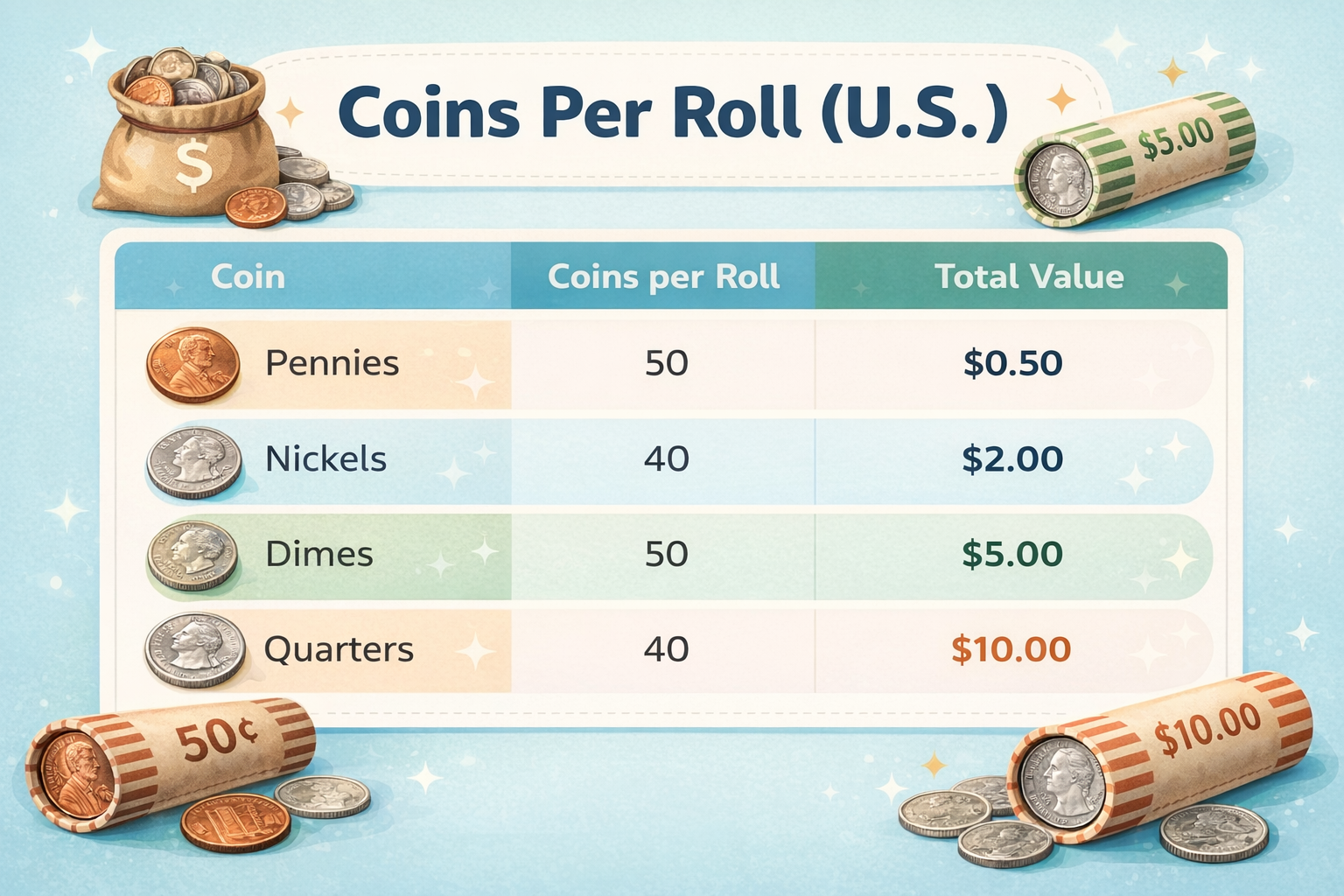
The number of coins in each roll varies because coins differ in size and thickness.
Pennies Per Roll
A standard roll of pennies contains 50 coins.
Since each penny is worth 1 cent, a full roll equals:
50 pennies = $0.50
Pennies are rolled in groups of 50 because they are relatively thin compared to other coins.
If you’re curious about larger penny amounts, you can also read:
Nickels Per Roll
A roll of nickels contains 40 coins.
Each nickel is worth 5 cents, so the total value of a nickel roll is:
40 nickels = $2
Nickels are thicker than dimes or pennies, which is why fewer coins fit inside a roll.
If you want to see how nickels add up to a dollar, check out:
How many nickels make a dollar?
Dimes Per Roll
A roll of dimes contains 50 coins.
Since each dime is worth 10 cents, the value of a full roll is:
50 dimes = $5
Dimes are the smallest U.S. coins by diameter, allowing more coins to fit into a roll.
You can also learn more here:
Quarters Per Roll
A standard roll of quarters contains 40 coins.
Each quarter is worth 25 cents, which means:
40 quarters = $10
Quarter rolls are commonly used by banks, laundromats, and vending machines because they provide convenient amounts of change.
You may also want to read:
These standardized coin roll amounts help banks process deposits quickly and ensure accurate cash handling for businesses and customers.
The Federal Reserve distributes coins to banks using these standard roll quantities to simplify counting and storage.
Why Coin Rolls Are Used
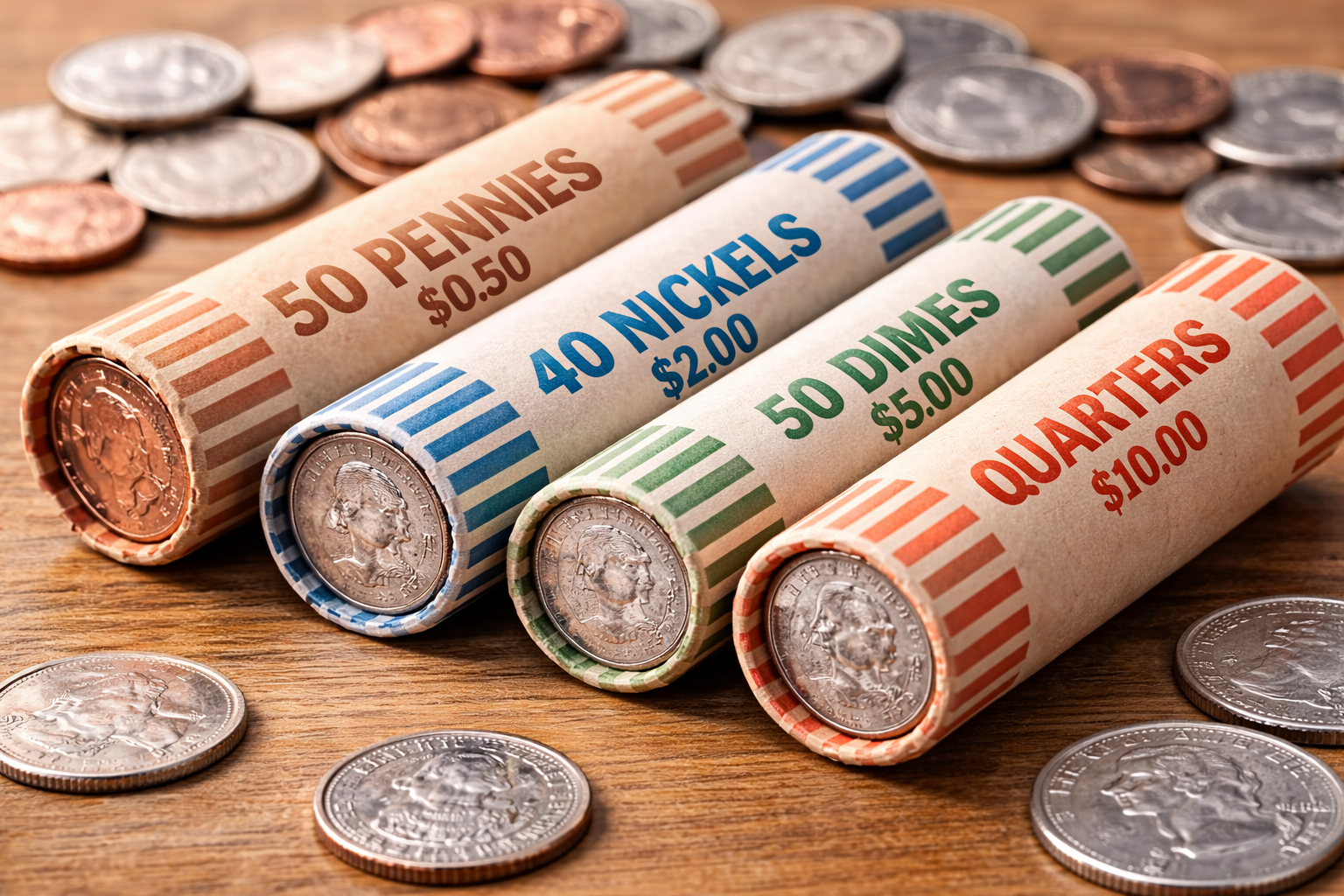
Coin rolls make it easier for banks, businesses, and individuals to organize loose change.
Instead of counting coins one by one, people can quickly calculate the value using the standard roll amounts. For example:
- 1 roll of quarters = $10
- 5 rolls of quarters = $50
- 10 rolls of quarters = $100
This system helps speed up transactions and makes depositing coins at the bank much easier.
Coin Rolls and Everyday Money Use
Coin rolls are commonly used by banks, businesses, and individuals who deal with large amounts of change. Instead of keeping loose coins scattered in jars or drawers, rolling them into standardized amounts makes counting and storing coins much easier.
Many banks offer free coin wrappers, which help customers organize their coins before depositing them. Once coins are rolled, the bank can quickly verify the amount and add it to your account. Businesses such as grocery stores, laundromats, and vending machine operators also rely heavily on coin rolls to keep registers stocked with the correct change.
Coin rolls are also useful for people who like to save spare change. Many people collect coins in jars at home and roll them once the jar is full. This can turn small amounts of loose change into meaningful savings over time.
For example, filling just one roll of quarters every week adds up to $520 in savings over a year. Even smaller coins can add up if saved consistently. Rolling coins regularly makes it easier to track how much money you have accumulated.
Why This Matters

Understanding basic money math helps build stronger financial habits. Even small amounts of change can add up over time.
For example, saving just one roll of quarters per week would give you:
$10 per week = $520 per year
If you’re interested in improving your finances even further, check out these helpful articles and pages:
Money tips for managing your finances
Side hustle ideas to earn extra money
Coin rolls are a simple way to organize and count money quickly. In the United States, standard rolls contain 50 pennies, 40 nickels, 50 dimes, and 40 quarters. Knowing these amounts can make everyday tasks like counting change, saving coins, or depositing money at the bank much easier. While coins may seem small individually, they can add up quickly when rolled and saved over time.
Like My Money Chronicles? Add us as a Preferred Source on Google to see more of our content in your search results.

Jason Butler is the founder of My Money Chronicles and an SEO consultant with over a decade of blogging experience. Since 2015, he has earned income through side hustles including blogging, eBay flipping, affiliate marketing, and freelance work while paying off over $64,000 in debt. His work has been featured in Forbes, Discover, Investopedia, and Yahoo Finance.