The Top 5 Most Valuable NFL Teams and What They Are Worth
Updated April 2026
Professional football isn’t just a sport anymore; it’s one of the most powerful money machines in the world. NFL teams aren’t just competing on the field, they’re competing financially, building billion-dollar empires through media deals, real estate, and global branding.
The numbers prove it. The National Football League now stands alone as the most valuable sports league on the planet, with the average franchise worth $7.65 billion in 2025, an 18% jump from the previous year.
From massive TV contracts to international expansion and private equity investments, these valuations continue to climb. Let’s break down the most valuable NFL teams and what’s really driving their worth.
1. Dallas Cowboys – $12.8 Billion

Jerry Jones bought America’s Team for $140 million back in 1989, when the franchise was hemorrhaging money and couldn’t sell out Texas Stadium. Fast forward to 2025, and his Cowboys are worth $12.8 billion. Dallas maintains its throne atop the NFL financial kingdom for the 18th straight year, after becoming the first sports franchise on the planet to crack $10 billion in 2024.
The Cowboys pulled in $1.27 billion in revenue last season, more than any other NFL team. Operating income hit $490 million, essentially double what any other franchise generates. Jones built a sponsorship machine worth approximately $300 million in corporate partnerships in 2024 alone. The team runs its own merchandise operation outside the NFL’s shared system, generating nearly $200 million annually.
AT&T Stadium fills its 80,000 seats despite the team’s 29-year Super Bowl drought. Jones can expand capacity beyond 100,000 for special events like boxing matches and college football playoffs. Dallas dominates social media with 4 million Twitter followers, 9 million on Facebook, and 2.3 million on Instagram. The brand transcends wins and losses at this point.
The 2024 season disappointed with injuries derailing another promising start, but Jones keeps investing. Dak Prescott and CeeDee Lamb got massive extensions to stay in Dallas long-term. Veterans like Trevon Diggs help to shore up the defense. The championship window stays open, at least in theory.
In the 1990s, Jones challenged the league’s exclusive deals with Visa and Coca-Cola by signing his own agreements with American Express and Pepsi, ultimately winning a legal battle that changed sports sponsorships forever. The Star, the Cowboys’ 91-acre headquarters in Frisco, opened in 2016 as a $1.5 billion mixed-use development. It generates revenue year-round through restaurants, retail, and even a high school football stadium. The partnership with the New York Yankees created Legends Hospitality, now a global operation managing venues worldwide.
Jones turned a struggling franchise into an empire, generating more than $820 million in local revenue that doesn’t get shared with other teams. Forbes has recognized Dallas as the world’s most valuable sports franchise every year since 2016, despite nearly three decades without a championship game appearance. They’re a lifestyle brand, real estate company, and marketing powerhouse that happens to play football on Sundays.
2. Los Angeles Rams – $10.7 Billion
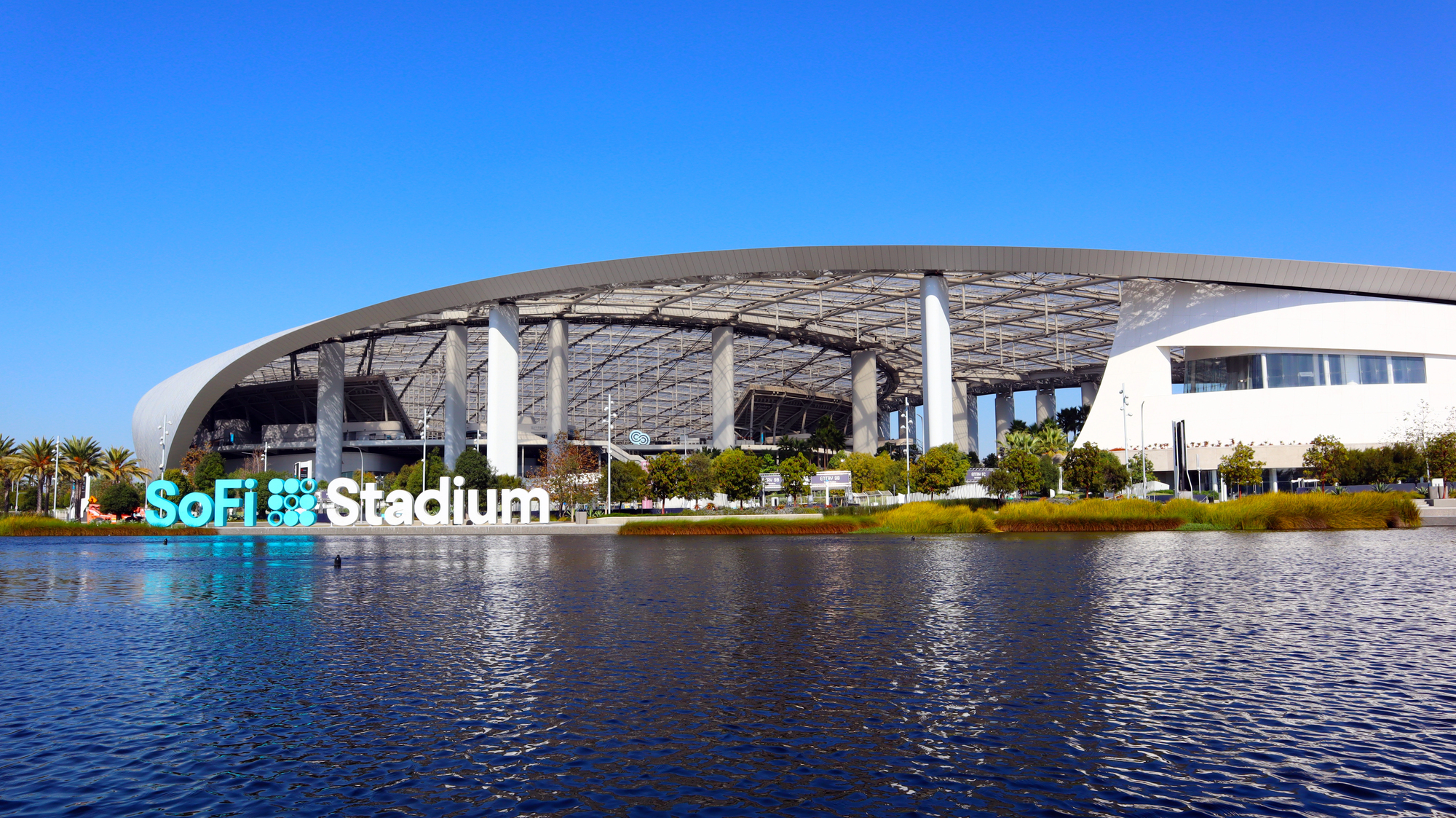
Stan Kroenke bet $5.5 billion of his own money on a simple premise: build the greatest stadium in sports history, and everything else follows. That gamble has officially paid off, with the Rams now valued at $10.7 billion. They’re just the second NFL franchise to join the $10 billion club. The 34% value increase from 2024 shows what happens when you combine a championship-caliber team with an architectural masterpiece.
SoFi Stadium serves as the centerpiece of Hollywood Park, a 300-acre development that will include retail, offices, and residential units. The 70,240-seat venue hosts the Rams, Chargers, major concerts, the 2026 World Cup, and the 2028 Olympics. Because Kroenke privately financed the stadium, he structured an 85/15 revenue split that heavily favors the Rams over their co-tenant, the Chargers.
The Rams generated $692 million in total revenue with sponsorships approaching $250 million, second only to Dallas. Operating income of $286 million might trail the Cowboys significantly, but the long-term real estate play could generate billions beyond football. When you own the building, the land, and the development rights, every event becomes pure profit.
Los Angeles waited 22 years for NFL football to return, and the Rams have made it worthwhile. Their Super Bowl LVI victory in their own building in 2022 cemented the franchise’s place in LA sports lore. The team boasts 1.8 million Twitter followers and over 2 million across Instagram and TikTok. The entertainment capital connection brings unique marketing opportunities that other markets can’t match.
Kroenke isn’t stopping at SoFi Stadium. In April 2025, he announced plans for a 52-acre neighborhood development in Woodland Hills that will house the Rams’ permanent headquarters, surrounded by more mixed-use development. The Rams have created the modern NFL franchise blueprint: elite facilities, aggressive roster building, and real estate development that ensures profitability regardless of on-field performance.
3. New York Giants – $10.25 Billion

The New York Giants just joined the $10 billion club, valued at $10.25 billion. The 34% surge from last year’s $7.85 billion happened despite another losing season. Market size and history matter as much as wins and losses in the NFL’s financial game. CNBC reports the team is negotiating to sell a 10% minority stake that would value the franchise at $10.5 billion, setting another NFL record.
MetLife Stadium might lack SoFi’s architectural splendor, but its Meadowlands location serves the largest media market in America. The Giants and Jets split the 82,500-seat venue 50/50, sharing revenues from non-NFL events equally. With a metropolitan area of 20 million people and the highest concentration of Fortune 500 companies in the nation, there’s plenty of money to go around.
The Giants generated approximately $665 million in revenue despite struggling to a 6-11 record in 2024. Season ticket holders span generations of families who’ve been passing down seats since the 1960s. Digital engagement stays strong with 1.6 million Twitter followers and millions more across other platforms. Fan patience has been tested by seven losing seasons in the last eight years, but the loyalty runs deep.
Russell Wilson signed a two-year, $8 million deal to either resurrect his career or bridge to rookie quarterback Jaxson Dart. The roster needs work, but the spending shows commitment to turning things around quickly.
The Mara family has controlled the Giants since 1925, representing the NFL’s longest continuous family ownership alongside Chicago’s McCaskey family. The pending sale of a 10% stake to Julia Koch and her family for over $1 billion shows how much the ultra-wealthy want into the NFL ownership club, even without voting rights.
Four Super Bowl championships create lasting brand equity that survives disappointing seasons. The Giants are one of the league’s marquee franchises, a team that matters nationally whether they’re winning or losing. Their proximity to Madison Avenue and Wall Street creates sponsorship opportunities that smaller markets can’t match. The franchise needs to start winning again soon, but the financial foundation stays rock solid.
4. New England Patriots – $8.9 Billion

Robert Kraft paid $172 million for the Patriots in 1994, preventing the team from moving to St. Louis. That investment has returned nearly 5,000% and now CNBC estimates the New England Patriots are valued at $8.9 billion. The Patriots maintained their fourth-place position despite the worst two-year stretch in franchise history.
Gillette Stadium consistently sells out its 64,628 seats even after back-to-back 4-13 seasons. The Patriots have maintained top-four NFL ticket prices since 2002. Their innovative “delayed exit” parking program pays fans $50 gift cards to wait 75 minutes after games, reducing traffic while keeping people spending on-site. Revenue hit $789 million in 2025, up from $712 million the previous year.
The Tom Brady era from 2001 to 2019 created a global brand extending far beyond New England. Six Super Bowl victories and 17 division titles built a fanbase spanning continents. Social media metrics prove this reach: 2.9 million Twitter followers and over 7 million on Facebook. Those numbers haven’t significantly dropped despite recent struggles.
Gillette Stadium hosts concerts and international soccer year-round, generating revenue beyond football. The team carries just 4% debt relative to its value, the lowest ratio among top franchises. Operating income of $220 million during a rebuilding phase shows how strong the market and brand remain.
The challenge is avoiding the fate of franchises that struggled for decades after their dynasties came to an end. The AFC East has improved with Buffalo’s emergence and Miami’s advancements. Still, the infrastructure and brand equity built during the Brady-Belichick era provide a foundation most franchises would kill for, even if the trophy case hasn’t grown lately.
5. San Francisco 49ers – $8.6 Billion

The 49ers embody Silicon Valley perfectly: innovative, expensive, and always pushing boundaries. Valued at $8.6 billion, the franchise saw a 25% increase from 2024’s $6.8 billion. They posted the lowest operating income among the top-five teams at just $80 million, but that reflects their philosophy—spend whatever it takes to win now.
Levi’s Stadium in Santa Clara leads the NFL in revenue generation. The 49ers topped the league in ticket revenue for the third straight year at $176 million after local taxes. The Bay Area’s tech workers with disposable income, as well as companies purchasing luxury suites for client entertainment, drive those numbers. The venue also hosted FIFA Club World Cup matches in 2025, adding international revenue.
Kyle Shanahan and John Lynch have built the NFL’s most talented roster through aggressive spending on stars like Christian McCaffrey, Nick Bosa, and Brock Purdy. Their willingness to pay top dollar explains the lower EBITDA. They’re trading profits for playoff runs, betting that sustained success drives greater long-term value than hoarding cash.
The Faithful maintain passionate support despite heartbreaking playoff losses. Five Super Bowl championships from the Montana and Young eras created expectations that haven’t been met recently. Social media engagement stays strong with 2.1 million Twitter followers. The team’s red and gold aesthetic has become fashionable beyond football, appearing in hip-hop videos and Silicon Valley boardrooms alike.
The York family’s ownership since 1977 provides stability, though CEO Jed York faced criticism during the Harbaugh departure. The May 2025 sale of a 6.2% minority stake to three Bay Area families at an $8.6 billion valuation set a then-record for NFL stakes. Tech money clearly wants into NFL ownership, and the 49ers offer the perfect entry point for Silicon Valley billionaires.
The 49ers sacrifice profitability for competitiveness. While Dallas prints money and New England hoards cash, San Francisco spends aggressively on talent. They’re betting the Bay Area market has enough wealth to support this approach indefinitely. The formula keeps them in championship contention virtually every year under Shanahan, even if the ultimate prize stays just out of reach.
What Really Drives These Sky-High NFL Valuations
Television money forms the foundation of every NFL fortune. Those $12.4 billion in annual media rights fees mean each team pockets roughly $460 million before selling a single ticket. The league’s 2029 opt-out clause has owners excited—streaming services will likely bid prices up significantly from current levels.
Stadium control separates the truly valuable franchises from the rest. The Cowboys, Rams, and Patriots generate massive revenues from concerts and special events because they control their venues. SoFi Stadium and AT&T Stadium have become year-round entertainment destinations, not just Sunday afternoon football venues.
Winning matters less than you’d think. The Cowboys haven’t reached a Super Bowl in nearly 30 years, yet they remain the most valuable franchise in sports. Still, championships can boost valuations by 50-65% according to Appraisal Economics Inc., explaining the Eagles’ jump after their recent victory. The 49ers prove you can maintain elite valuations just by staying competitive.
International expansion is just getting started. Games in London, Munich, and Mexico City represent the beginning. Marc Ganis, who consults for multiple NFL teams, calls the league’s new international focus “a major shift” with massive revenue potential. Teams finally see themselves as global brands rather than regional franchises.
Private equity changed everything in 2024. The NFL’s approval of institutional investment eliminated the traditional 20-25% discount for minority stakes. Arctos Partners and Ares Management created a valuation floor, while individual billionaires compete to overpay for small stakes. The Bears’ pending sale of 2.3% at an $8.9 billion valuation shows the demand—people paying nearly $200 million for tiny stakes with no voting rights.
Scarcity drives everything. Thirty-two franchises exist, period. No expansion planned, teams rarely sell, and Sportico notes the average ownership tenure is 41 years. More billionaires emerge every year, but NFL teams stay fixed at 32. It’s the ultimate luxury good, ensuring valuations keep climbing.
What Team Valuations Teach About Money
NFL team valuations aren’t just about sports; they’re a blueprint for how wealth actually works.
First, ownership matters. The people making the most money in the NFL aren’t the players; they’re the owners. Players earn high incomes, but owners build long-term wealth through appreciating assets. That’s a key difference between earning money and building it.
Second, multiple income streams are everything. NFL teams don’t rely on just one source of revenue. They make money from TV deals, sponsorships, ticket sales, real estate developments, and even events like concerts and international games. This is the same concept behind building side hustles or investments that generate income from different sources.
Third, location and market size play a huge role. Teams in major markets like Dallas, Los Angeles, and New York consistently rank at the top because they have access to bigger audiences and more corporate money. In personal finance, this translates to understanding opportunity, where you are and what you have access to matters.
Finally, scarcity drives value. There are only 32 NFL teams, and that limited supply keeps prices rising. The same principle applies to investing; assets that are limited and in demand tend to grow over time.
You may never own an NFL franchise, but you can apply these same ideas by investing, building assets, and creating income streams that grow over time. If your goal is to reach true financial independence, here’s a deeper look at how financial freedom actually works.
The Billion-Dollar Future
These five franchises lead the NFL’s financial elite, pulling the entire league upward. Every team is now worth at least $5.5 billion. The average franchise value of $7.65 billion would rank among the Fortune 500. The gap between the NFL and other sports keeps widening; NBA teams average $4.6 billion, MLB teams $2.82 billion, and NHL teams just $1.79 billion.
What’s coming next? Eighteen regular-season games will replace a preseason contest, meaning higher ticket prices and additional TV revenue. Direct-to-consumer streaming will let teams capture more value from their content. New stadiums in Buffalo, Tennessee, Cleveland, and eventually Chicago will each unlock hundreds of millions in additional revenue.
Teams are becoming diversified businesses that happen to play football. The Cowboys run a real estate empire, the Rams develop entire neighborhoods, the Chiefs launched a production studio, and the Dolphins generate $50 million annually from Formula 1 races. These aren’t just football teams anymore—they’re entertainment conglomerates, real estate developers, and lifestyle brands.
The fundamentals point to continued growth. With guaranteed profitability and cultural dominance (72 of the 100 most-watched U.S. telecasts), NFL valuations will keep rising. When billionaires fight to pay $1 billion for 10% stakes with no voting rights, the smart money sees much higher values ahead.
Which franchise hits $15 billion first? Smart money’s on the Cowboys, but never underestimate what the right owner in the right market can accomplish. In professional football, growth is the only constant, and these five franchises are leading the charge into new financial territory.
NFL team valuations show one thing clearly. Wealth is built through ownership, leverage, and long-term strategy. These franchises aren’t just making money from ticket sales; they’re stacking revenue from media rights, real estate, sponsorships, and global expansion.
While most people will never own an NFL team, the same principles still apply on a smaller scale. Building assets, creating multiple income streams, and thinking long-term can completely change your financial trajectory.
If there’s one takeaway from these valuations, it’s this: the biggest money isn’t made working for income, it’s made owning something that grows.
Like My Money Chronicles? Add us as a Preferred Source on Google to see more of our content in your search results.

Jason Butler is the founder of My Money Chronicles and an SEO consultant with over a decade of blogging experience. Since 2015, he has earned income through side hustles including blogging, eBay flipping, affiliate marketing, and freelance work while paying off over $64,000 in debt. His work has been featured in Forbes, Discover, Investopedia, and Yahoo Finance.