How Nia Adams Built a $50K Financial Wellness Business
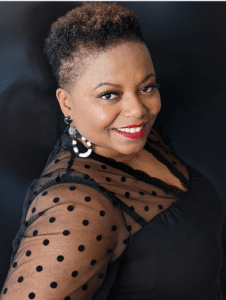
In this edition of the Makers & Movers Series, we’re featuring Nia Adams, a financial wellness speaker and consultant who has spent nine years helping people improve their relationship with money.
Nia’s entrepreneurial journey hasn’t been easy. She spent years investing money into her business without seeing a profit. Along the way, she dealt with challenges involving pricing, finding the right customers, and even her own confidence. Instead of giving up, she worked on improving her business model and eventually turned things around.
Today, her business consistently generates $50,000 in annual revenue while she continues working her 9-to-5. In this interview, Nia shares how she got started, the mistakes she made, and what helped her finally build a profitable business.
1. Introductory Insight
Tell us your name and what you do.
My name is Nia Adams, and I’m a financial wellness speaker and consultant.
How long have you been doing it?
I’ve been in the financial education industry for nine years.
2. The Journey
What made you decide to start, and how did you turn the idea into something real?
Experiencing my own obstacles and mistakes with my personal finances made me realize there was more to money than just numbers. As I started making progress with my finances, friends began approaching me with questions.
That’s when I realized the information I was learning was something other people needed, too.
When did you first realize, “This might actually work”?
When I started receiving feedback from people who followed me online but hadn’t even become clients yet. They would share how the information I posted was helping them improve their financial habits.
That showed me I was making an impact, even beyond my paying clients.
3. The Money
How much did it cost you to get started?
Originally, I spent a lot of money that I probably didn’t need to spend. I paid for branding services, purchased a logo, and ordered business cards that I never even used.
The biggest initial hurdle was actually getting started. Once I took that step, I began investing in the things I needed to operate the business.
My first website was built using Wix and cost about $200 per year. I also purchased business cards from Vistaprint and jumped right in.
Looking back, I realize that I could have started without spending money on some of those things.
How does your business make money today?
I partner with community banks, organizations, and universities to provide professional development, financial wellness workshops, curriculum development, and curriculum review services.
What can you share about your revenue and financial growth since starting?
I spent a lot of years not making much money and operating in the red. Several things contributed to that, including not identifying the right target market, self-sabotage, incorrect pricing, and taking on too much instead of focusing on what was working.
I didn’t start making a profit until 2023. Before that, my business operated at a loss every year, which meant my 9-to-5 job was still financing it.
In 2023, I made approximately $5,000 in revenue and around $2,000 in actual profit.
Now, my business consistently generates $50,000 a year. It pays for itself, produces a profit, and allows me to use those funds to help meet my personal financial goals.
I also want to be transparent that I still have my 9-to-5 job.
4. Running and Growing the Business
What’s been the most effective way you’ve found to attract customers, clients, or grow your audience?
Building relationships instead of making everything transactional has been the most effective approach.
I’ve learned the importance of understanding my customers and what they actually need. I make sure my offers are based on what clients want rather than what I think would be good for them.
I also attend and speak at events where my target market is present. That allows me to connect directly with potential clients and build meaningful relationships.
Consistently following up and maintaining relationships with past and current clients has been important, too. I also make sure my branding, marketing, and conversations clearly communicate what I do and how I can help.
What tools, systems, or resources do you rely on most to run your business?
I use a customer relationship management (CRM) system to manage client relationships, proposals, and other business activities.
I also use Zoom for meetings and Google Calendar to stay organized.
5. Challenges and Lessons
What’s been the biggest setback, mistake, or challenge you’ve faced, and how did you respond to it?
My biggest challenge was realizing how much my own character flaws, past trauma, and lack of confidence were secretly sabotaging my business.
At first, I was hardheaded about it. Eventually, I started doing the work necessary to address those issues.
For example, I had a habit of creating new things without putting enough work into what I had already created. If something wasn’t generating sales, I would give up and move on to another idea.
The problem was that I hadn’t actually committed to seeing things through.
I could take an idea, create a plan, and execute it. But sticking with the parts of the process that I wasn’t naturally strong in was a weakness for me.
Sales was one of those areas.
The uncomfortable part was actually executing the sales process consistently, especially when I wasn’t seeing immediate results.
I overcame that by spending time focusing specifically on my sales process. I observed what was happening, analyzed the results, and eventually fine-tuned my approach.
What’s something you know about business now that you wish you knew when you started?
Just do it.
Do it scared. Do it unprepared.
You learn so much more from actually doing something than you do from spending all your time studying every aspect of it.
Taking action will teach you lessons that can move you much further than waiting until you feel completely ready.
6. What’s Next
What’s next for you and your business?
We’ve narrowed down our offers and are currently focused on building the brand and increasing business revenue.
Instead of trying to do everything, we’re concentrating on what works and continuing to grow from there.
7. Personal Insights
How do you balance building a business with everything else in your life?
Strict boundaries and time management.
I’ve had to skip some weekends out and become very intentional about how I spend my time. I also had to stop participating in activities that weren’t moving the needle in my business.
Another important lesson has been learning when to delegate tasks to other people instead of trying to do everything myself.
8. Advice for Aspiring Entrepreneurs
What advice would you give someone who wants to do what you’re doing?
Don’t feel like you have to have everything figured out before you start. Your business will evolve just as you evolve.
Build relationships with people who are already doing the things you want to do in your business.
Also, make sure you develop some business besties. You need people you can vent to, but also people who can provide motivation, share knowledge, and help you keep moving forward.
9. Quick Finish
What’s something about you that people would never guess?
That it took me years to make a profit in my business, despite how hard I was working and how active I was on social media.
Where can people learn more about you and your business?
You can learn more about me and my services at www.niaadams.com.
Like My Money Chronicles? Add us as a Preferred Source on Google to see more of our content in your search results.

Jason Butler is the founder of My Money Chronicles and an SEO consultant with over a decade of blogging experience. Since 2015, he has earned income through side hustles including blogging, eBay flipping, affiliate marketing, and freelance work while paying off over $64,000 in debt. His work has been featured in Forbes, Discover, Investopedia, and Yahoo Finance.